
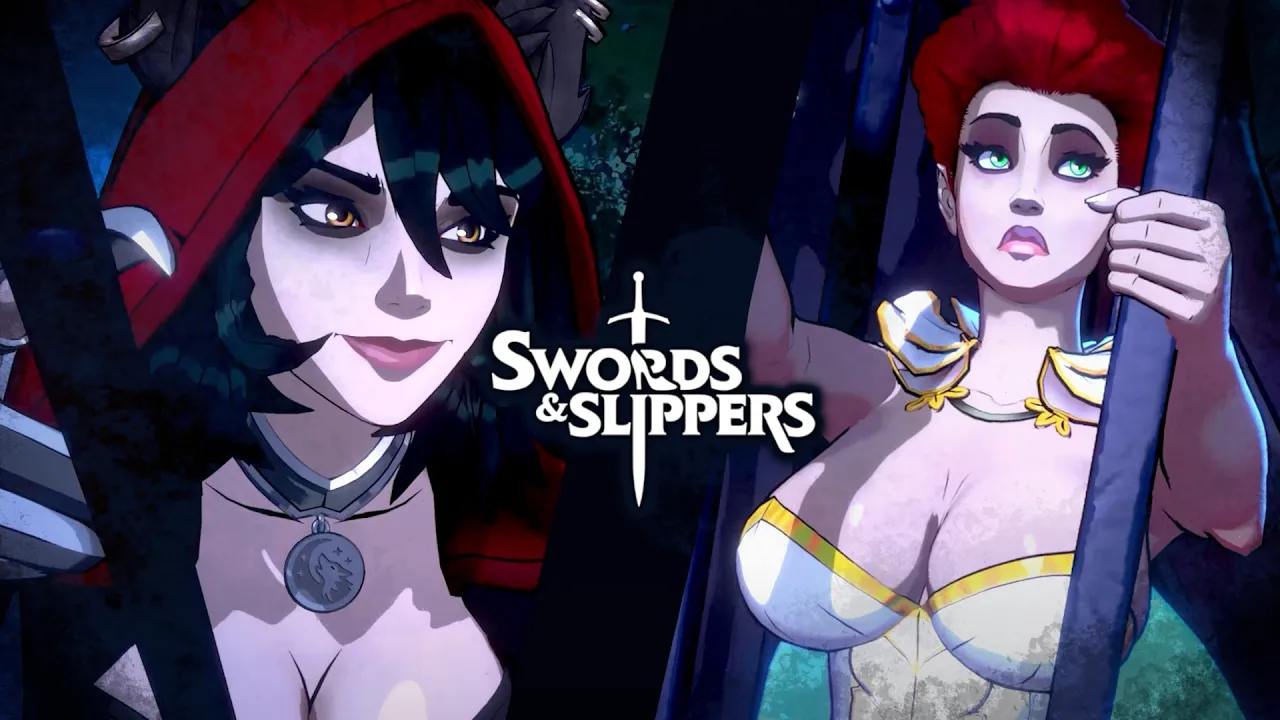
Swords & Slippers reimagines classic fairytales with a dark, action-packed twist, but beneath the surface lies a dense web of fan theories, clever Disney parodies, and hidden easter eggs. Understanding these layers transforms how you experience the game’s story, from its twisted holiday traditions to the deeper meanings behind them, both explored further in our Swords And Slippers Guide. This swords and slippers theory deep dive reveals the developer’s meticulous world-building across every corner of the lore that players have debated since the demo launched.
Swords & Slippers Theory: Unpacking the Disney Parody
The game wears its Disney inspirations on its sleeve, but the parody runs far deeper than a few costume swaps. Every major character directly mirrors a classic Disney princess while subverting the core lessons of those films. According to the official Steam store page, the game is described as a “fairytale-twist character action game,” yet the community has uncovered direct visual and narrative callbacks that elevate the experience from simple homage to a layered satire. The real swords and slippers theory hinges on how each princess’s new motive inverts the original moral.
Snow White’s Poisoned Apple now acts as a permanent stat boost, but the dwarf companions are replaced by Shadow Imps that whisper dark advice during combat. This inversion suggests that the “pure heart” trope is rewritten into a lust for power. Red Riding Hood no longer carries a basket of treats—instead, she wields a Bloodstained Axe and the wolf accompanies her as a Phantom Familiar. The original warning about strangers becomes a lesson in embracing internal violence. Rapunzel trades her tower for a Floating Castle Hub and uses her hair as a Grappling Whip, turning the damsel-in-distress archetype into an independent hunter.
| Character | Original Fairytale Moral | Swords & Slippers Twist |
|---|---|---|
| Snow White | Kindness conquers envy | Ambition feeds on poisoned power |
| Red Riding Hood | Beware of strangers | Befriend the wolf, weaponize your own ferocity |
| Rapunzel | Rescue through love and patience | Escape the tower through violent independence |
The parodies are not limited to the protagonists. The Fairy Godmother appears as a cynical bureaucrat who demands “wish citations” and charges a cooldown fee for each spell, directly mocking the Disney version’s altruistic magic. This cynical bureaucrat figure has become a favorite subject of swords and slippers fan theories, as players argue she represents the capitalist corruption of childhood innocence. These comedic moments, while funny, are critical building blocks of the overall satire.
The Dark Twist on Snow White
Snow White’s story arc in Swords & Slippers challenges the very concept of a “happy ending.” Instead of awakening with a kiss, she breaks the curse by decapitating the Evil Queen with a shard of the mirror. The Seven Dwarfs are replaced by Crystal Golems that drop crafting materials when destroyed. Many players believe this version of Snow White is actually the queen’s ghost possessing the princess, a theory supported by the Ghostly Mirror collectible that repeatedly says “the reflection hates you.” This theory aligns with the broader swords and slippers theory that no character is truly redeemed—only transformed into another form of greed or violence.
Red Riding Hood's Dual Identity
Red Riding Hood’s moveset splits between a stealth approach (using the hood as a camouflage cloak) and a rage mode (direct attacks with the Bloodstained Axe). The Phantom Familiar can be dismissed or upgraded, allowing players to mirror the original story’s dichotomy of “safe” and “wild.” Community discussions on the official Discord have noted that the Grandmother’s House stage contains a second kitchen hidden behind a bookshelf, where the Wolf’s human form sits eating a stew that looks suspiciously like the Hunter’s boots. This detail has become one of the most-liked swords and slippers easter eggs and is frequently cited as proof that the entire world is stuck in a time loop.
Fan Theories About the Dark Twisted Fairytales
The Swords & Slippers community on Steam and Discord has assembled a thriving hub of fan theories, many of which share overlapping evidence. The core question that drives every swords and slippers fan theory is simple: is the castle hub real, or is it a fabricated memory? Below are the three most debated theories, their supporting in-game evidence, and how the community ranks them.
| Theory | Key Evidence | Community Credibility |
|---|---|---|
| The characters are trapped in a shared dream | All three heroes share the same “nightmare curse” debuff after midnight, and each boss room contains a clock that always reads 11:59 PM. | Very High |
| The Fairy Godmother is the final boss | A cut dialog file (not yet used) references “your wish is my demand.” Her “wish citation” documents have a wax seal identical to the Evil Queen’s. | High |
| The castle is a replica of the real world destroyed by war | Random environmental notes describe a “great war outside the forest,” and the castle hub contains a sealed door that reads “To the Real World – Permanently Closed.” | Medium |
These fan theories are not just idle speculation—they are supported by hidden game data and developer interviews that mention “a twist ending that recontextualizes the entire day-night loop.” One of the most compelling pieces of evidence is the Infinite Corridor room, which only appears if you die five times in the same midnight shift. Inside, all three princesses are sleeping in glass coffins, and the Fairy Godmother says “Wake up, little stars. The dreamer is failing.” This scene is widely cited by swords and slippers fan theories as the moment that breaks the fourth wall and suggests the player character is not a hero but a therapist.
The Time Loop Theory
The day-night cycle itself may be a prison. Every morning, the castle hub resets to the same state, and the Eternal Dawn achievement requires completing five consecutive days without dying, after which the hub’s calendar remains stuck on the same date. A developer newsletter (available on the official Steam news page) joked that “our idea of infinite progression is an infinite Monday.” This line has been taken seriously by theorists who claim the entire game is a simulation designed to keep characters from remembering a tragic past. The Broken Crown item flavor text reads “Once worn by a king who forgot he was dreaming,” which strengthens this swords and slippers theory.
The Hidden Fifth Character
Data-miners from the Steam Community Hub have found an unplayable character model labeled “Sleeper” that uses the same skeleton as the princesses but with a tattered hood and a Mirror Mask. The model appears only in the Developer Room of the castle hub, accessible via a hidden button behind the throne. Although the devs have not confirmed its purpose, many players believe this will be the true final form of one of the three princesses when the full game releases. Until then, this remains one of the most mysterious swords and slippers references tied to future content.
Hidden Easter Eggs and Clever References
Swords & Slippers is packed with references that range from obvious gags to obscure nods that only lore enthusiasts will catch. Below is a table of the most talked-about easter eggs, sorted by how many players have reported finding them based on community surveys.
| Easter Egg Name | Location | Effect / Discovery Method |
|---|---|---|
| The Mickey Mouse Clock | Kitchen in the Castle Hub | A mouse-eared clock chimes 13 times at midnight, then a hidden door opens to a treasure room. |
| The Glass Slipper Trap | Red Riding Hood’s Grandmother’s House | A glass slipper on the mantle, when touched, triggers a floor trap that summons a poison cloud. |
| The 101 Dalmatians Poster | Rapunzel’s Tower roof | A poster of spotted dogs with the text “Spotted Plague – 101 victims” – touching it gives the Dog Whistle item. |
| The Beauty and the Beast Reference | Library in Snow White’s Castle | A candelabra and a teapot on a desk; if you pour tea, the teapot speaks and reveals a map of hidden side rooms. |
These easter eggs are not only fun but also reinforce the overarching swords and slippers theory that the game world is a pastiche of every Disney movie, compressed into a single playable space. For instance, the Mickey Mouse Clock has become a meme within the community because the treasure room it reveals contains a letter titled “The Dream That Wasn’t Walt’s,” which implies the entire world is a knock-off theme park. This is one of the most direct swords and slippers disney parody moments and is often shared in meme form on the game’s Discord server.
The game also hides meta-jokes that break the fourth wall. In the Castle Throne Room, there is a bookshelf filled with books titled “How to Train Your Dragon Slayer” and “The Little Mermaid: Back to the Gulag,” both referencing other franchises in a satirical way. These swords and slippers comedy moments are what make the game stand out in the roguelite genre, because they reward attentive players with both laughs and lore.
Comedy Moments That Build the Theory
The game’s writers have a sharp sense of humor that consistently pokes fun at both fairytale tropes and the player’s own actions. The comedy is not separate from the lore—it actively informs the swords and slippers theory by showing that the world knows it is fictional.
One standout example occurs when you interact with the Talking Mirror in the castle hub. The mirror can be asked for fashion advice, map hints, or jokes. If you ask for jokes three times in a row, it says, “You’re delaying your inevitable death, but here’s a pun: ‘Why did the princess cross the road? To get to the other boss fight.’” This line references the game’s Dawn-to-Midnight progression system and makes light of the grinding nature of roguelites. These moments are consistently cataloged by fans as swords and slippers comedy moments, often compiled into YouTube videos.
Another iconic comedy beat happens when the Fairy Godmother interacts with Rapunzel’s Grappling Whip. She says, “That’s not a whip, dear. That’s your hair. Put it back in your head.” This line is delivered in a deadpan tone and has become a community inside joke, spawning memes about “hair whips” vs. “real whips.” The fact that the game acknowledges its own absurdity reinforces the theory that the characters are aware they are part of a parody. In fact, several comedic lines directly contradict the game’s dark tone, which some fans interpret as evidence that the world is a meta-narrative about trauma and coping.
A table of notable comedy lines that have been discussed in community hubs shows how each punchline doubles as a lore clue. Every entry below originated as a throwaway gag that players later connected to the game's darker narrative beats, which is exactly why the theory community treats comedy as evidence rather than filler:
| Line | Context | Why It Matters for the Theory |
|---|---|---|
| “Why are you hitting yourself? That’s for aesthetic.” | Snow White hits a training dummy with her own shoe. | Shows the game winks at its player for grinding. |
| “This floor smells like a missed opportunity.” | After dying in the Castle Cellar. | Suggests the developer sees death as a joke. |
| “You’re the 147th person to say that to me today.” | The Fairy Godmother’s response to a wish request. | Implies the world is stuck in a loop, supporting time-loop theory. |
These comedic interactions are not random filler—they are woven into the world-building. The developers have confirmed in an interview linked from the official Steam news that “every joke has a lore reason, even if it’s just to show the characters are exhausted with the script.” This statement alone gives weight to the swords and slippers theory that the entire game is a self-aware parody.
How the Day-Night Cycle Reinforces the Lore Theory
The day-night cycle is a core gameplay mechanic in Swords & Slippers, but it also serves as a narrative device that deepens the swords and slippers theory. During the day, the castle hub is cheerful, characters are friendly, and you can complete romance quests and hub upgrades. At night (after the midnight clock strikes), the same castle becomes a combat zone, the princesses’ eyes glow red, and the hub NPCs turn into hostile enemies. The dramatic shift has led many players to believe that the “happy day” is a facade and the “dark night” is the true reality.
Official game data from the Steam store page states that “the day cycle allows upgrades and social interactions, while the night cycle is pure combat.” However, fans have discovered that if you complete the entire game without ever dying during the night cycle, the Sun Queen achievement grants a dialog option that says, “You never saw the truth. Lucky you.” This strongly implies that the night cycle is a metaphorical representation of the characters’ inner demons—or alternately, the real world outside the simulation.
A further layer comes from the Infinite Corridor easter egg mentioned earlier. The room’s glass coffins are only visible during midnight; during the day, the same corridor is blocked by a wall of thorns. This binary visibility directly ties the day-night mechanic to the theory that the castle hub exists in two states: one shaped by the Dreamer’s positive memories and one shaped by repressed trauma. This idea is among the most compelling swords and slippers fan theories because it finds evidence in both the game’s mechanics and its hidden content.
The community’s testing on the Steam forums has shown that the castle hub’s music changes from a cheerful waltz during the day to a discordant ambient track at night. If you stand still during the transition, you can hear a voice whispering the same line each time: “Why are you still here?” This line recurs in the Developer Room and is considered one of the strongest clues that the characters are aware of the loop. These discoveries rely on community reports and should be considered as of August 2026.
Frequently Asked Questions
What is the main swords and slippers theory about the story?
The primary theory suggests that the entire world is a simulation or dream, and the three princesses are fragments of a single mind trapped in a time loop. Evidence includes repeated motifs of clocks set to 11:59 PM, the Infinite Corridor showing glass coffins, and the Fairy Godmother’s fourth-wall-breaking comments.
Are there any confirmed easter eggs related to Disney parodies?
Yes, the game deliberately creates exaggerated Disney parodies. The Mickey Mouse Clock in the kitchen, the Beauty and the Beast tea party scene, and the 101 Dalmatians poster are all direct nods. Each parody also changes the original story’s moral, turning it into darker, more cynical conclusions.
How can I find the hidden developer room easter egg?
The developer room in the castle hub is accessed by interacting with the throne’s right armrest while wearing the full set of the Royal Guard armor (three pieces). This reveals a button marked “Dev Tool.” Pressing it opens a corridor behind the throne containing the unplayable Sleeper model and a note from the lead developer.
What are the most popular fan theories on the Discord server?
The top three fan theories are: (1) the castle hub is a simulation, (2) the Fairy Godmother is the final boss, and (3) the three princesses are the same person split into three identities. These theories are supported by data-mined audio, hidden rooms, and dialogues that contradict the surface-level story.
Did the developers confirm any of the swords and slippers theory elements?
As of August 2026, developers have not officially confirmed any single swords and slippers theory element, but acknowledged community creativity on the official YouTube channel. In a live Q&A, they said “we enjoy reading your theories more than we enjoy writing ours,” hinting multiple timelines may be correct.