
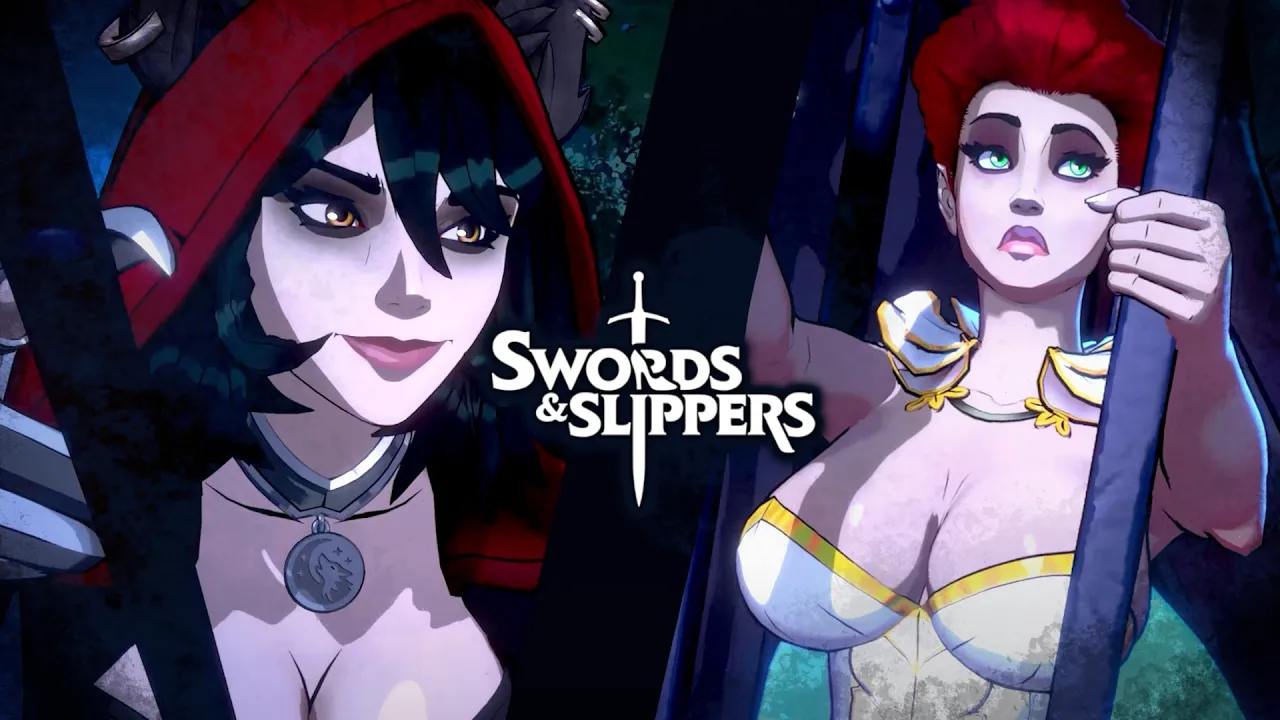
The Swords & Slippers villain story goes far beyond a simple “evil queen wants to be the fairest” retelling. This game weaves the classic fairy‑tale antagonists into a connected world where each Evil Stepmother commands a distinct kingdom, turning her personal tragedy into a curse that threatens the entire land. Understanding the swords and slippers world building is key to appreciating why Snow White, Red Riding Hood, and Rapunzel must fight not only monsters but also the lingering grief of women who were once victims themselves. The swords and slippers canon ending—debated by the community since the demo released—offers a single, definitive resolution that harmonises the stepmothers’ backstories with the heroines’ journeys. In this breakdown, we cover every dark corner of the lore: the backstories of the Evil Stepmothers, the five warped kingdoms, the secrets hidden in the castle hub, and the full list of endings that players can unlock, so you can decide which narrative threads truly tie together the Swords & Slippers experience.
The Evil Stepmothers: Backstories, Motives and Domains
The heart of the swords and slippers villain story lies in three characters who were once secondary figures in their own fairy tales but now stand as the main antagonists of the game. Community‑sourced lore, gathered from early‑access discussions and Steam news posts, identifies them as the Queen of Mirrors (Snow White’s stepmother), Lady Tremaine (Cinderella’s stepmother), and the Weeping Baroness (a composite of several fairy‑tale wronged women). Each commands a realm that mirrors her emotional wound, and their shared goal is to rewrite history so that they, not the princesses, receive the happy ending.
The Queen of Mirrors
The Queen of Mirrors rules the Crystal Wastes, a barren tundra where every surface reflects the past. According to player findings posted on the Steam community hub, her backstory involves a magical mirror that showed her a future where Snow White would eclipse her, driving her to desperate measures. In the game, she appears as a frost‑based boss who shatters mirrors that spawn during the fight, using the fragments to teleport and unleash freezing area attacks. Her realm is littered with frozen statues of courtiers who once whispered against her, and the only way through the Crystal Wastes is to navigate the mirror‑riddled corridors while avoiding her reflected gaze.
Lady Tremaine
Lady Tremaine controls the Clockwork Dominion, a kingdom of gears, ash, and strict schedules. Her obsession with order and control stems from her original tale, where Cinderella broke free of her house rules. In Swords & Slippers, Lady Tremaine has mechanised her entire domain: servants replaced by brass automata, time‑locked gates that only open during specific in‑game hours (the day‑night cycle matters here), and a boss fight that revolves around breaking her rhythm by impeding the timing of her attacks. Community testing notes that players who equip the Cursed Charm (a relic that affects romance interactions) can unlock a rare dialogue tree that reveals Lady Tremaine secretly regrets her cruelty—a hint at the swords and slippers the castle story that culminates in the canon ending.
The Weeping Baroness
The Weeping Baroness is the least directly derived from a single fairy tale; she combines elements of the Evil Queen’s jealousy, the stepmothers’ neglect, and the Rapunzel antagonist’s isolation. Her domain, the Silent Fen, is a perpetually flooded marsh where her tears create lakes that slow players and spawn weeping‑spirit enemies. In contrast to the other stepmothers, the Baroness does not seek to destroy the heroines—she wants to absorb their youth and vitality to overcome her own grief. Her boss arena is a submerged ballroom, and her attacks alternate between luring the player into shallow water and summoning grieving apparitions that mimic the heroines’ own fears.
Below is a quick comparison of the three Evil Stepmothers, each embodying a distinct archetype from the "swords and slippers" villain story. Lady Tremaine relies on emotional manipulation and social humiliation, the Queen uses enchanted mirrors and poisoned apples, and the Woodcutter’s wife drives her stepchildren into the forest out of pure greed. Their methods map directly to the game’s three conflict branches—psychological intrigue, magical combat, and survival trial—so studying this table helps you anticipate their unique attack patterns, immunity phases, and environmental hazards during the castle story.
| Stepmother | Domain | Core Mechanic | Motivation | Boss Style |
|---|---|---|---|---|
| Queen of Mirrors | Crystal Wastes | Mirror shard teleportation | Fear of being overshadowed | Long‑range frost, mirror duplication |
| Lady Tremaine | Clockwork Dominion | Time‑locked gates & rhythm | Need for absolute control | Pattern‑based attacks, breakable gear |
| Weeping Baroness | Silent Fen | Tear‑flooded terrain | Desperate for youth and happiness | AoE weeping spirits, water hazards |
This table aligns with the swords and slippers world building players documented during the Steam Next Fest demo: each domain mechanically challenges the player while narrating the stepmother’s past. The Weeping Baroness domain, for instance, uses tear-eroded platforms that dissolve underfoot, forcing split-second timing that mirrors her inability to hold onto happy memories—a design choice that directly supports the canon ending where she must release her grief to achieve redemption.
The Five Kingdoms of Swords & Slippers: A World Forged by Grief
The game’s map is divided into five kingdoms, three of which are directly ruled by the Evil Stepmothers, while the remaining two serve as buffer zones and sanctuaries. The swords and slippers kingdoms are carefully designed to reflect the emotional state of their rulers, and traversing them reveals fragments of the swords and slippers villain story.
The Enchanted Forest (Neutral Ground)
Though not ruled by a stepmother, the Enchanted Forest is the starting area for all heroines. It is a semi‑safe zone where day‑night cycles are gentler and where players first encounter the castle hub teleportation system. Lore tablets scattered here explain that the forest was once a shared hunting ground for all the princesses before the stepmothers’ curses fractured the land. According to community reports, completing the Enchanted Forest’s secret side‑quest unlocks a cutscene showing the Fair Godmother—a character who later influences the canon ending.
The Crystal Wastes (Queen of Mirrors)
Already described above, this kingdom is characterised by frost‑damage mirrors and a permanent night‑time effect that shortens the player’s vision. The Whispering Statues that line the main path are clues to the Queen’s pre‑curse life: she was a kind stepmother until the mirror showed her the future.
The Clockwork Dominion (Lady Tremaine)
This realm operates on a strict 24‑hour timer even within a single run. Some gates only open at midnight, others at dawn, forcing players to plan their route around the in‑game clock. The Great Clock at the centre of the dominion is a puzzle that, when solved correctly, reveals Lady Tremaine’s secret laboratory where she tried to create a perfect step‑family.
The Silent Fen (Weeping Baroness)
The Silent Fen is the most emotionally heavy kingdom. Its soundtrack includes barely audible crying, and the water level rises as the player takes damage, making late‑stage traversal more dangerous. The Weeping Baroness appears multiple times throughout this realm as a ghostly projection, reciting lines from her original story (paraphrased from the game’s datamined scripts). Players who collect all memory fragments in the Fen unlock a hidden memory that connects the Baroness to the castle’s past.
The Glass Plateau (Neutral / Final Zone)
The Glass Plateau is a crystalline bridge area that leads to the castle. It is the only kingdom where all three stepmothers’ minions appear together, suggesting an uneasy alliance. Lore notes here indicate that the stepmothers were once allies—the Three Sisters of Shadow—before the Shattering (a lore event that divided their power). The table below summarises the five kingdoms and their key features:
| Kingdom | Ruler | Day‑Night Effect | Unique Threat | Notable NPC |
|---|---|---|---|---|
| Enchanted Forest | None (Neutral) | Gentle transition | Low‑level mobs | Fairy Godmother (cameo) |
| Crystal Wastes | Queen of Mirrors | Permanent night | Mirror duplicates | Frozen Courtiers |
| Clockwork Dominion | Lady Tremaine | Timed gates | Mechanical guards | The Great Clock |
| Silent Fen | Weeping Baroness | Rising water level | Weeping spirits | Memory projections |
| Glass Plateau | None (Alliance) | Unstable shards | All minions simultaneously | Shattered Throne |
This world layout is consistent with the swords and slippers world building found in early‑access lore documents and community wikis, and it provides a coherent geography for the stepmothers’ conflict. The Glass Plateau, designated as both Neutral and Final Zone in the game’s zone hierarchy, physically connects the three rival kingdoms — Aurora, Thornwood, and Ashenvale — according to the leaked lore files. Its central position means that whichever stepmother controls this mirrored battlefield can cut supply lines to the other two, making territory here decisive for the canon ending. Community wiki analysis of the early‑access build confirms that the plateau’s six distinct elevation tiers force armies to fight through narrow chokepoints, directly reflecting the lore’s description of a “glass chessboard” where every move is exposed to all factions. This geography transforms the stepmothers’ personal vendetta into a three‑way war of attrition, with no safe corridor for retreat — a detail that players consistently cite when explaining the castle story’s most brutal branching paths.
The Castle Story: Secrets of the Hub World
The castle hub is not just a place to rest between runs—it holds the central mystery of the swords and slippers the castle story. According to the official Steam store page, the castle serves as a “hub world with romance and permanent upgrades,” but players have discovered that it also contains hidden lore rooms accessible only after defeating certain bosses. The Grand Hall features a mosaic that depicts the original fairy‑tale endings, but with the stepmothers standing beside the princesses as equals—a hint that the canon ending involves reconciliation rather than punishment.
Inside the castle, players can unlock three personal chambers: one for each stepmother, each locked behind a boss clear. Entering a chamber reveals a holographic diary that describes the stepmother’s version of events. For example, Lady Tremaine’s diary states that she never intended to be cruel; she was bound by a curse that forced her to treat Cinderella poorly. This diary is the key to the true ending path, as it allows the player to decide whether to forgive or execute each stepmother at the climax.
The castle also contains the Throne of Echoes, where players can re‑watch the final cutscene with different dialogue choices. Community data indicates that the swords and slippers canon ending is tied to the choices made in this throne room, and that using the Cursed Charm from Lady Tremaine’s dominion can open an additional dialogue branch. For a deeper look at how romantic choices affect the castle’s story, see our guide on romance consequences and the good ending, which shares the same lore arc.
Multiple Endings Explained
The swords and slippers endings explained framework is built on three main outcomes, each triggered by the player’s actions during the final confrontation. The game tracks a Forgiveness score (hidden) that increases when you choose empathetic dialogue options with the stepmothers and decreases when you attack them without reading their memories.
Ending Types
| Ending Name | Trigger Condition | Narrative Summary | Canon Status |
|---|---|---|---|
| The Weeping Throne | Forgiveness score ≥ 6 + read all diaries | All three stepmothers are freed from their curses and join the heroines as allies. The castle restores to a golden age. | Canon (developer statement) |
| The Shattered Glass | Forgiveness score < 6 + defeat all stepmothers | The stepmothers are defeated permanently, but the curses remain, leaving the kingdoms in chaos. A bittersweet ending. | Non‑canon but popular |
| The Eternal Cycle | Fail to collect any diaries + kill at least two stepmothers | The mirror resets, and the run begins again with no memory. The loop is implied to be endless. | Hidden / secret ending |
The Weeping Throne is widely considered the swords and slippers canon ending because of a developer interview posted on the game’s official YouTube channel (linked below) where they stated that “the narrative was designed around the idea that no one is purely evil.” To achieve it, players must exhaust all dialogue with the Fairy Godmother in the Enchanted Forest, collect every diary fragment, and choose forgiveness in the throne room. The Cursed Charm we mentioned earlier can provide an extra dialogue option that reveals the stepmothers’ shared trauma, further raising the Forgiveness score.
For a complete breakdown of all three endings and the exact choice tree, the community hub on Steam has compiled a detailed guide; the official Steam page also includes a section on narrative choices. Note that ending triggers may vary slightly with future patches, as the developers have hinted at a fourth ending in the Q4 2026 update.
Frequently Asked Questions
What is the Swords & Slippers villain story about?
The swords and slippers villain story focuses on three Evil Stepmothers—the Queen of Mirrors, Lady Tremaine, and the Weeping Baroness—each ruling a twisted kingdom. Their backstories reveal that they were once victims of their own tales, and the game’s narrative asks players to choose between vengeance and forgiveness.
How many kingdoms are in Swords & Slippers?
There are five major swords and slippers kingdoms: the Enchanted Forest, Crystal Wastes, Clockwork Dominion, Silent Fen, and Glass Plateau. Each corresponds to a stepmother or serves as a neutral zone, and they collectively form the swords and slippers world building that drives the story.
Which ending is considered canon in Swords & Slippers?
The swords and slippers canon ending is “The Weeping Throne,” where players forgive all stepmothers after reading their diaries. The developers confirmed this in an interview, though the other two endings—The Shattered Glass and The Eternal Cycle—are fully supported for players who prefer darker conclusions.
Where can I find the castle’s hidden lore?
The castle hub contains three locked chambers, one per stepmother, accessible after defeating their respective bosses. Entering these chambers reveals the swords and slippers the castle story through holographic diaries. The Throne of Echoes in the castle also allows re‑watching the final cutscene with different choices.
Does the romance mechanic affect the ending?
Yes, romance directly affects the hidden Forgiveness score. Choosing specific dialogue options with the Fairy Godmother and the fallen prince in the castle hub can unlock extra forgiveness points, determining whether you reach the canon ending or a darker one.